
MOVING BEYOND SELF-DOUBT
BUILDING RESILIENCE AND CAPACITY
Our Mission and Guiding Ethos
“To reveal the enormous potential in every human being and
help them tap into their own resourcefulness.”
Emergent Horizons offers recovery coaching for the grey area of substance use, in Victoria, BC and online. We are the recovery coach that carries you to the destination you choose, while you are always in the driver’s seat. You control the pace, we are the navigator. We won’t judge your substance use or behaviour, or breach your confidentiality.
Recovery coaching is not medical care, psychotherapy or counselling, and we do not diagnose or treat medical or mental health conditions. Instead, our work complements therapy, 12 Step sponsorship programs and medical interventions rather than replacing them. When your needs fall outside the scope of recovery coaching, we will encourage you to seek support from an appropriate physician, mental health professional, counsellor or other qualified provider.
Our goal is to focus, motivate and facilitate the change we know you are capable of.
When Patterns
First Begin to Shift
Many of the most important turning points in life emerge slowly — they begin as subtle questions, growing misalignments, or a sense that something needs attention before it becomes urgent. Addressing these questions early can protect health, relationships, and a sense of direction. If this aligns with your own experience, the three sections below outline common themes where reflection and support can be especially helpful.
When Patterns
Become Entrenched
For some, substance use or compulsive behaviors move beyond quiet warning signs and become deeply ingrained patterns that disrupt health, relationships, work, and self-trust. At this stage, willpower alone is rarely enough, and attempts to stop can feel exhausting or defeating. We provide compassionate and empowering services for those facing established addiction challenges. When you’re ready, feel free to start a conversation.
“What lies behind us and what lies before us are tiny matters compared to what lies within us.” — Ralph Waldo Emerson
Care Before Crisis
Most support systems are designed to respond once something has gone wrong. Emergent Horizons takes a different approach. The work here focuses on areas of life where strain often builds quietly, long before it becomes a crisis—when patterns feel slightly misaligned, roles begin to shift, or meaning starts to erode. These are moments that rarely trigger intervention, yet they shape health, relationships, and resilience over time. By paying attention earlier, it becomes possible to reflect, recalibrate, and make intentional changes before stress accumulates into burnout or breakdown. This preventative, capacity-building perspective sits at the heart of our work.

Grey-Area Substance Use
Not all harmful substance use looks like addiction, and many people live in a grey area where habits feel contained but quietly strain health and relationships.

Life Transitions
Life transitions—whether chosen or unexpected—can overwhelm our coping strategies, making support and reflection valuable before stress hardens into burnout.

Identity and Purpose
When questions about meaning, values, or direction surface, exploring identity can help restore clarity and agency during periods of uncertainty or change.
“Though no one can go back and make a brand new start, anyone can start from now and make a brand new ending.” — Carl Bard
Sound Bites
The following sound bites reflect the approach we take at Emergent Horizons. Addiction is understood as a response to unmet needs and the pull of short-term relief from emotional pain, while recovery is a process of developing awareness, connection, and maturity. By integrating scientific insight with lived experience and a deeper sense of meaning, this approach supports individuals in moving away from destructive coping strategies toward lasting resilience, authentic relationship, and a more grounded sense of self. Our approach includes and respects both secular and religious perspectives.

The Science and Spirituality of Addiction
The Science and Spirituality of Addiction, by founder Stuart Morse, forms the intellectual foundation of Emergent Horizons. Drawing on years of study, reflection, and lived experience, the book integrates neuroscience, psychology, and spiritual development into a coherent framework. The coaching, workshops, and educational work of Emergent Horizons are grounded in the principles articulated in this volume.
The book bridges the gap between the laboratory and the human spirit, offering a compassionate yet scientifically grounded guide to recovery. Integrating neuroscience, psychology, and spirituality, it reveals how addiction arises not from moral failure but from a complex interaction of neurochemical reward systems, emotional wounds, and existential disconnection.
Drawing equally on empirical research and lived experience, this book maps the terrain of recovery as both a physiological recalibration and a spiritual reintegration. It explores how ancient traditions, modern psychology, and post-modern insight converge to form a comprehensive understanding of human healing. Readers will discover how dopamine, trauma, and conditioning shape compulsive behavior—and how awareness, compassion, and connection can transform it.
Written for those who seek clarity and practical tools as much as hope, The Science and Spirituality of Addiction speaks to professionals, thinkers, and seekers alike. By uniting science and soul, it invites readers to integrate their fragmented selves and rediscover wholeness in a fractured world.
Recent Blog Activity
This blog explores the wider terrain surrounding addiction, recovery, and human change — from contemporary drug policy and cultural trends to the quieter questions of meaning, purpose, and resilience that shape long-term wellbeing. Some posts respond to current events; others reflect on clinical insights, lived experience, or emerging research. Together, they aim to offer context rather than quick answers, and to support thoughtful engagement with the personal and social dimensions of substance use, recovery, and life transitions.

Grey Area Drinking: When Is It Time to Take a Closer Look?
“You don’t have to have an alcohol problem for alcohol to be causing problems.” As a coach, I am not qualified to dispense medical diagnoses or conduct counselling or psychological therapy sessions. But formal certification in these fields is not required when helping…
Prescription Drug Dependence: The Quiet Addiction
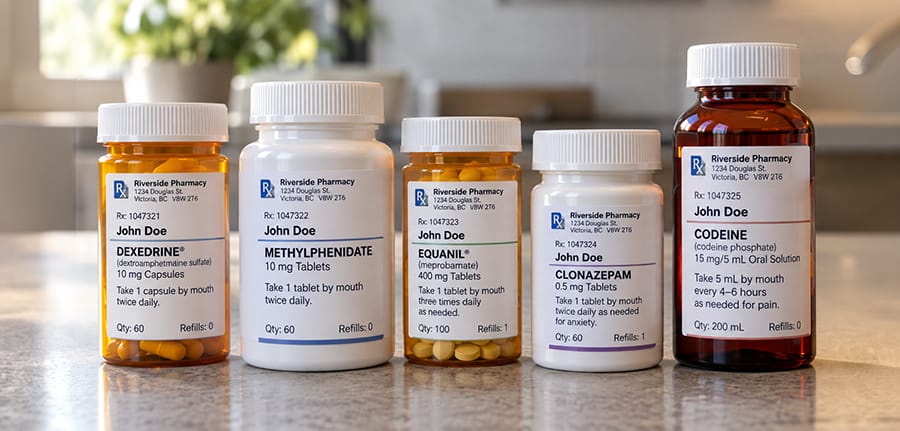
The pills were legal, Viv. You know, I got prescriptions. Johnny Cash, as portrayed by Joaquin Phoenix in Walk the Line (20th Century Fox, 2005) On October 4, 1965, Singer Johnny Cash was arrested at the El Paso airport in Texas in possession of 688 Dexedrine capsules…

The Cracked Vessel: Why What We Crave is Never Enough
How Does Metaphor Communicate Meaning? The Spanish Philosopher José Ortega y Gasset once wrote: The metaphor is probably the most fertile power possessed by man He was referring to the role of metaphor as machine, which like a lever (the simplest machine) allows a…

Recovery Coaching and the Art of Becoming
The Need for Personal Autonomy Nobody enjoys being forced to do what they do not want to do, and such force rarely leads to the intended outcome. In the context of addiction recovery, there are cases where involuntary rehabilitation is effective in preserving life,…

The Psychology of the Shadow: Addiction, Identity, and Symbolism
Dissociation in Addiction Multiple personality disorder (now known as dissociative identity disorder) is a common subject for Hollywood Movies (e.g., Sybil [1976] and Split [2016]). It describes a state where two or more personalities exist within the same person….

The Meaning of Life
The Two Meanings of the Word “Meaning” One of life’s most enduring questions is What are we doing here? or, to put it another way, What is the meaning of life? If you are a hitchhiker’s guide to the Galaxy fan, you might already know that the answer to that question…

Saanich author sees ‘Portuguese approach’ as answer to B.C.’s drug crisis
The Science and Spirituality of Addiction (This article was originally published in the Victoria News on May 24, 2026) When software engineer Stuart Morse had a bad day at work, he would come home to Saanich to a glass of wine to take out the bad taste of the day….

Is alcohol good for us?
How one statistical mistake convinced the world that alcohol was good for us Back in the 1980’s a popular subject for discussion in consumer programs, news bits and cultural commentaries was the fact that French people experienced chronic illness at a lower rate than…

Our Mission
Our Mission Statement: “ To reveal the enormous potential in every human being and help them tap into their own resourcefulness. ” We often fail to reach our potential because of the way we process negative life experiences. We suffer an emotional injury and cling to…